AUTHENTIC USER EXPERIENCE LAB

AUTHENTIC USER EXPERIENCE LAB
This page serves as a resource for projects funded under the NSF CAREER award, “Integrating a Data-Driven Approach with Technologies for Sharing Rural Knowledge and Values,” under awards nos. 2208631 and 1845964. Special thanks to Young Hwan Na for contributing to the summaries below.
Theme 1: Rurality, Place, and Local Knowledge
Theme 2: Data, Maps, and Civic Participation
Theme 3: Work, Labor, and Technological Limits
Theme 4: Designing for Inclusion and Belonging
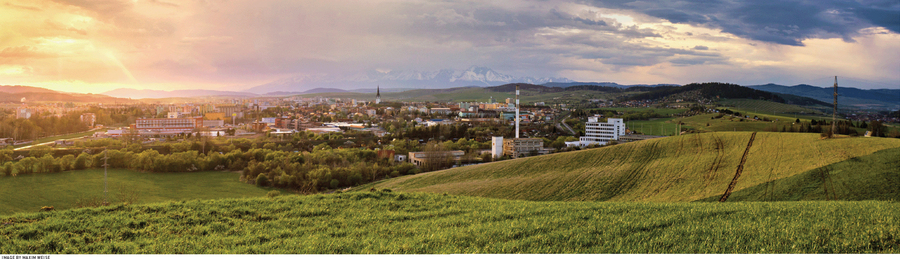
This paper advocates “designing from the rural” as a perspective that values rural places as sites of innovation, creativity, and knowledge-making in their own right, and challenges dominant narratives that frame rural communities primarily through lack or deficit, such as being underserved or disconnected. Drawing on ethnographic fieldwork, we highlight how rural communities engage with technology in ways that are resourceful, relational, and shaped by local values and ecologies. Starting from rural practices and experiences, rather than relying on outside assumptions, design research can identify opportunities for technology development suitable to rural life’s rhythms, infrastructures, and social relations.
Re-centering Rural Expertise: Rural communities are not “behind” or deficient; they are sites of innovation, creativity, and deep sociotechnical knowledge shaped by local values and ecologies.
Designing from Rural Practices: Start from rural lived realities, rather than applying urban assumptions.
Recognizing Diverse Ruralities: There is no single rural. Rurality spans many cultures, industries, and histories.
Rural Needs Are Distinct: Rural communities do not need to “catch up” to urban technologies; their own ecologies, occupations, and values shape what technologies are appropriate vs what is appropriate for cities.
Importance of Embedded Partnerships: Effective rural design requires long-term, locally grounded relationships that avoid “parachuting” and respect rural residents’ domain expertise.
This introduction to a special issue of rural computing in ACM ToCHI explores how rurality and computing intersect. We position rural HCI as a vital research direction for rethinking equity, design, and the role of technology across diverse social contexts.
Rurality is Performed and Contextual: The article frames rurality not as a fixed demographic category but as a symbolic, lived, and actively performed identity, highlighting why HCI must take seriously the ways technologies help enact and shape rural life.
Rural Assets as Design Inspiration: The authors emphasize that rural communities possess innovative practices, strengths, and opportunities that should inform computing research, expanding what counts as technological possibility beyond urban assumptions.
Reorienting HCI Toward Rural Computing: By foregrounding rurality as a vital, culturally and economically complex site, the authors call for HCI to treat rural contexts as central rather than peripheral, which matters for creating more equitable, power-aware technological research.
This chapter examines how rural life can be understood through affect such as the feelings and embodied experiences that shape everyday encounters. Through vignettes from rural California and the Midwest, the work highlights the layered and sometimes contradictory nature of rural experience, where infrastructures, landscapes, animals, and neighbors intersect. Instead of presenting conclusions or design implications, this work presents an open-ended narrative that invites interpretation. For HCI researchers, it serves as a provocation to engage more deeply with the affective dimensions of rural life, expanding how rural computing is represented and imagined.
Affective Rural Life: The chapter centers the emotional and embodied dimensions of rural living, reminding HCI that rurality must be understood as a lived, felt experience rather than a demographic or infrastructural category.
Layered and Contradictory Experiences: The vignettes reveal how landscapes, infrastructures, animals, and neighbors intersect in both connective and conflictual ways, challenging simplified or romanticized views of rural life.
Rejecting Simplified Stereotypes: By refusing to reduce rural life to simplified or stereotypical categories, the chapter presents rurality as layered, intersecting, and shaped by multiple affective forces.
Affective Writing as Provocation: Through open-ended, vignette-based writing, the chapter invites interpretation and expands how HCI imagines and represents rural life.

This paper investigates how participation in a rural open government data initiative shapes citizen–government relationships and citizens’ understandings of data. Through a case study of a state-level Department of Natural Resources (DNR) open data initiative with rural hunters, we conducted interviews with hunters to examine how involvement in data collection and consumption affected trust, expertise, and engagement. We find that participation in the initiative allowed hunters to stake a role in the data ecosystem, positioning themselves as knowledgeable contributors rather than passive data providers. Hunters developed critical perspectives on how data is collected, interpreted, and used, raising concerns about overly reductive analysis that fails to capture the diversity of hunting practices and experiences. At the same time, the initiative improved feelings of trust and respect between hunters and the DNR by signaling transparency and recognition of hunters’ expertise. We argue that open data initiatives can foster civic trust and meaningful participation when they value citizen expertise, provide contextualized and legible data, and involve citizens more holistically across stages of the data ecosystem, rather than limiting participation to data submission alone.
Participation Shapes Trust in Open Data Initiatives: The study shows that hunters’ participation in a state-level open government data initiative improved feelings of trust and respect toward the government agency behind the initiative. Rather than viewing the agency as distant or opaque, participants saw data sharing as a signal of transparency and recognition of their role in wildlife management.
Rural Participants Develop Data Expertise Through Participation: The study shows that hunters engaged with open data as active contributors rather than passive users. Through participation in data collection and use, hunters were able to “stake an active role in the data ecosystem,” drawing on their field-based knowledge to interpret and critically engage with how wildlife data was produced and represented.
Open Data Shapes Whose Expertise Is Recognized: The study shows that participation in an open government data initiative allowed hunters to take on more active roles in the data ecosystem and develop critical perspectives on data. By involving hunters in data collection and interpretation, the initiative helped to level hierarchies between the government agency and the public, highlighting how participation influences whose knowledge is valued.
Meaningful Engagement Requires More Than Data Access: The paper shows that making government data available alone is not sufficient to support meaningful civic participation. Instead, the findings highlight the importance of involving citizens more holistically in the open data ecosystem, including participation in data collection and critical engagement with how data is interpreted and used.
This study examines how data-driven farming startups imagine the future of agriculture through their technologies and narratives. By analyzing the websites of startups, we identify four distinct visions of the farmer shaped by data: the vigilant farmer, who seeks constant control of the farm through data monitoring; the efficient farmer, who uses optimization to balance profitability and sustainability; the enlightened farmer, who finds harmony with natural systems through data insights; and the empowered farmer, who claims ownership of agricultural data for personal and collective benefit. These visions highlight not only the promises of smart farming technologies, but also how data reshapes relationships of power between farmers, farm workers, nonhumans, and technology providers.
Data Creates Multiple Farmer Identities: Smart farming technologies produce four competing visions of the farmer (vigilant, efficient, enlightened, and empowered), highlighting how data reshapes expectations of agricultural work.
Visions Are Intertwined: These framings overlap in practice, suggesting that designing technology around any single vision risks oversimplifying agricultural realities.
“Democratization” Is Not Universal Access: Startups often use the language of democratization to promote farmer empowerment against large corporations, not to provide open or public access to data.
Caution Against Over-Automation: Automating too much farm decision-making risks distancing farmers from ecological knowledge and lived experience.
Support Open, Modifiable Systems: Data-driven farming tools should be open and understandable so farmers can see how they work, customize them when needed, and avoid depending on company-controlled platforms.
This thesis investigates how broadband maps, often used to determine infrastructure funding and policy, can be redesigned to better reflect the lived experiences of underserved rural communities. Drawing on qualitative research with local advocates and community members, the study examines how current maps rely on ISP-reported coverage data and overlook key aspects of everyday internet access. The findings identify four broadband map elements, Primary Language Spoken, Internet Cost, Household Density, and Internet Access Hub Location, that are critical for equity-driven advocacy. At the same time, the study reveals a broader challenge. In some rural, low-income immigrant communities, home internet access is not universally perceived as necessary, shaped by digital literacy barriers, safety concerns, and reliance on family members. The thesis argues that by integrating contextual and experiential knowledge, broadband maps can function not only as technical representations of coverage, but as community-centered advocacy tools that support more equitable approaches to broadband access.
Broadband Maps Miss Lived Experiences: The study shows that widely used broadband maps rely heavily on ISP-reported coverage data and often fail to capture how people actually experience internet access. As a result, issues such as affordability, reliability, language barriers, and shared household number remain invisible in tools that shape funding and policy decisions.
Advocacy Requires More Than Coverage Data: The study shows that official broadband maps rely heavily on ISP-reported coverage data, which often fails to reflect people’s real internet experiences. As a result, local advocates, community organizations, and public agencies must take on additional work by verifying individual addresses and gathering stories and other on-the-ground evidence to challenge inaccurate data and argue for broadband resources. This finding highlights how maps designed primarily as technical tools do not fully support the everyday advocacy needed to improve broadband access and equity.
New Map Elements Can Strengthen Equity-Driven Advocacy: The study shows that four broadband map elements, Primary Language Spoken, Internet Cost, Household Density, and Internet Access Hub Location, are essential for reflecting community realities and supporting stronger, equity-focused advocacy. By making these factors visible, broadband maps can better support efforts to identify underserved areas, argue for resources, and improve internet access for communities that are often overlooked.
Perceived Need for Internet Is Not Universal: The study shows that access to home internet is not universally perceived as necessary, particularly among some rural, low-income immigrant communities. This limited perceived need is shaped by digital literacy barriers, concerns about online safety, and reliance on younger family members for digital tasks. These findings challenge the assumption that expanding broadband access alone will lead to adoption and highlight the importance of addressing how people understand the value of internet access in their everyday lives.
Maps Can Function as Community Advocacy Tools: The study shows that by integrating narrative-driven and contextual elements, broadband maps can be reimagined as advocacy tools rather than neutral representations of infrastructure. When designed around lived experience, maps can better support local advocates, community organizations, and public agencies in communicating community needs, building trust, and advancing digital equity.
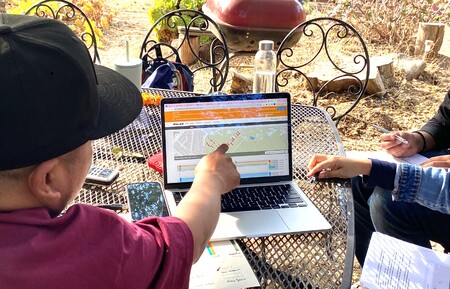
This paper investigates the potential of personal informatics technologies for strawberry field workers in California, many of whom are exposed to poor working conditions under climate change–driven heat stress. The study reveals how farm workers have normalized grit, the adversity, irregularity, competitiveness, and helplessness embedded in their labor, limiting the usefulness of self-tracking tools for fostering healthier working conditions. Instead of empowering reflection, personal informatics often reinforced pressures to overwork or compete, underscoring a mismatch between current designs and the lived realities of front-line workers. We argue for reimagining personal informatics beyond white-collar contexts to account for the vulnerabilities and resilience of farm workers, situating HCI within broader struggles for equity, worker health, and the precarious realities of agricultural labor under harsh conditions.
Personal Informatics has Limited Value in Precarious Work Contexts: Personal informatics tools offered limited benefits for strawberry field workers whose labor is shaped by instability, physical strain, and precarious working conditions. In these conditions, self-tracking did not meaningfully support healthier or safer work practices.
Farm Workers Normalize Adversity and Grit: Framed through the concept of “normalizing grit,” we show how these conditions shape how workers engage with and make sense of their personal informatics data.
Self-Tracking can Reinforce Pressure to Overwork: Personal informatics data sometimes reinforced existing pressures to work harder, compete with others, or maximize output. In this context, self-tracking did not consistently support rest or recovery and could instead contribute to unhealthy labor practices.
Designs Reflect Limits of Individual-Centered Approaches: The paper highlights a mismatch between the idea that self-tracking data can help people reflect on their work and make positive changes and the realities of front-line agricultural labor. We show that structural working conditions limit workers’ ability to act on personal informatics data.
This paper examines how individuals who engage in both farm work and computer-based knowledge work manage conflicting rhythms in their lives in order to sustain “balanced” lives. Drawing on interviews with farmer–knowledge workers, we introduce the concept of rhythmic attunement to describe how people align bodily, environmental, and technological rhythms to craft what they call a “reasonable life.” Rather than framing farming and knowledge work as incompatible, the paper shows how workers sustain both practices by creatively negotiating daily routines and digital infrastructures around natural rhythms—such as seasons, day/night cycles, and plant and animal life. In doing so, the authors expand HCI research on work and sustainability, demonstrating how rural and hybrid livelihoods can inform the design of technologies that support more balanced, resilient, and environmentally attuned forms of life.
Attunement Work supports Sustainable Lives: The paper introduces attunement work—anchoring, decoupling, and gap-filling—as the strategies people use to manage competing rhythms. These practices help individuals maintain work that aligns with their physical, emotional, and personal needs.
Natural and 9–5 Rhythms can Complement: Rather than viewing farming and knowledge work as incompatible, the study shows how people mix natural rhythms with structured work schedules to create a more balanced and sustainable life.
People use Rhythms as Resources, Not Obstacles: Participants anchor to some rhythms for accountability, decouple from others to gain flexibility, and weave both together to sustain motivation and energy throughout the day.
Insights for Designing Work-Support Technologies: Supporting sustainable work requires technologies that respect people’s personal rhythms, values, and needs for slowness, downtime, and flexibility. Attunement work offers a lens for rethinking assumptions about time and productivity in the design of work-support tools.
Attunement Work and Design: Attunement work can help designers reconsider assumptions about time, productivity, and how tools influence people’s everyday routines. It offers a way to understand how people relate to different rhythms in their lives and can guide the creation of technologies that better support personal values, flexibility, and well-being.
This paper explores how artificial intelligence (AI) is often misframed in relation to smallholder farming, which represents the majority of the world’s farmers but often faces poverty, low yields, and climate vulnerability. While AI in agriculture promises data-driven support, current trajectories emphasize precision farming designed for large-scale, monoculture operations, raising concerns about accessibility and sustainability. Building on prior research with smallholder farmers and decades of social science work in digital agriculture, we propose a shift toward farmer-centered AI research that recognizes the diverse practices, needs, and values of smallholder farmers. Instead of reinforcing productivist models, this work calls for AI design that supports equity, resilience, and alternative farming futures, positioning AI as a tool that could either widen inequalities or contribute more to agricultural systems.
Misaligned AI Trajectories: AI in agriculture is largely built for industrial, large-scale farming rather than smallholder realities, risking deeper inequalities when tools don’t match farmers’ needs.
Infrastructure and Data Constraints: Many AI systems assume high-end devices, stable connectivity, and robust datasets that smallholder farmers often lack, making existing tools inaccessible or unreliable in practice.
Linguistic and Trust Barriers: AI tools that rely on dominant languages or text-heavy interactions overlook the multilingual, low-literacy realities of many farmers, and past technological failures have weakened trust in new systems.
Farmer-Centered AI Futures: AI must be calibrated to smallholder farmers’ local contexts and structures, because systems not grounded in farmers’ realities can become ineffective or deepen existing inequalities.

This paper examines the hiking app AllTrails through a body-inclusive lens, asking how its design shapes expectations of who hiking is for and what counts as a “successful” hike. Using the walkthrough method, the authors analyze the app’s features, navigation tools, and trail rating systems to show how AllTrails subtly reinforces norms of fitness, athleticism, and speed that can alienate or shame novice hikers and those already marginalized in outdoor recreation. The study highlights how time estimates, difficulty ratings, and design cues create pressure to complete hikes at prescribed paces, undermining access intimacy and invalidating diverse hiking experiences by framing hiking primarily in terms of fitness, physical performance, and competition. By surfacing these embedded values, we call for alternative app designs that emphasize comfort, accessibility, and connection with nature, aligning with broader efforts in HCI to support inclusivity and equity in outdoor technologies.
Fitness Norms Shape Hiking Experiences: The study shows that AllTrails emphasizes time estimates, elevation gain, distance, and difficulty ratings, framing hiking through fitness-oriented expectations. These design choices establish expectations around pace, fitness, and athleticism, shaping which hiking experiences are treated as standard and which fall outside dominant norms.
Metrics can Undermine Confidence: Standardized time estimates and difficulty ratings often do not align with hikers’ lived experiences on the trail. When these metrics are inaccurate or overly prescriptive, they can contribute to anxiety, feelings of insufficiency, and pressure to overexert in order to meet app-defined expectations.
Navigation Tools create Pressure: AllTrails’ navigation features can increase anxiety when distance and elevation information do not match what hikers encounter. These mismatches create uncertainty and place pressure on users to adhere to the original path, even when on-the-ground conditions differ.
Reviews Reinforce Belonging Norms: User reviews frequently frame trail difficulty through assumptions about fitness, particularly in descriptions of “easy” and “moderate” hikes. These framings can be discouraging to newer hikers and reinforce expectations that marginalize users who fall outside of certain body and fitness norms.
Design Choices can Produce Invalidating Experiences: Across metrics, navigation, and reviews, the AllTrails interface can produce invalidating experiences by prioritizing standardized measures over hikers’ lived experiences on the trail. These interactions undermine comfort and autonomy, particularly for users who fall outside of certain body and fitness norms.
This paper examines how small farmers build “tiny publics” as a way to respond to the challenges of industrial agriculture and market consolidation. Rather than scaling up to compete, these farmers practice social movement strategies that emphasize community, visibility, and affective ties. Drawing on case studies of local markets and farming networks, we illustrate how small farmers cultivate publics through everyday practices such as farm stands, farmers’ markets, storytelling, and food-sharing, that connect consumers to farming as both a livelihood and a political act. By highlighting these strategies, we show how small farmers generate alternative forms of collective power, reconfiguring what counts as participation in agriculture and how publics are made around food systems.
Cultivating Tiny Publics: Small farmers build tightly knit, everyday communities (“tiny publics”) that connect consumers to local food systems and sustain alternative agricultural practices.
Cooperative Survival Strategies: Farmers share resources, uphold community standards, mentor newcomers, and co-create a trustworthy local food ecosystem.
Everyday Un-Blackboxing: Farmers explain sustainable practices, differentiate themselves from industrial agriculture, and tailor transparency to varying consumer knowledge levels.
Performing Sustainability: Farmers enact sustainability through small, continuous actions—storytelling, visible labor, and consistent presence in the community.
Resilience and Fortitude: Success relies on farmers’ ability to manage uncertainty, isolation, physical strain, and unpredictable losses through adaptive, improvised strategies.